
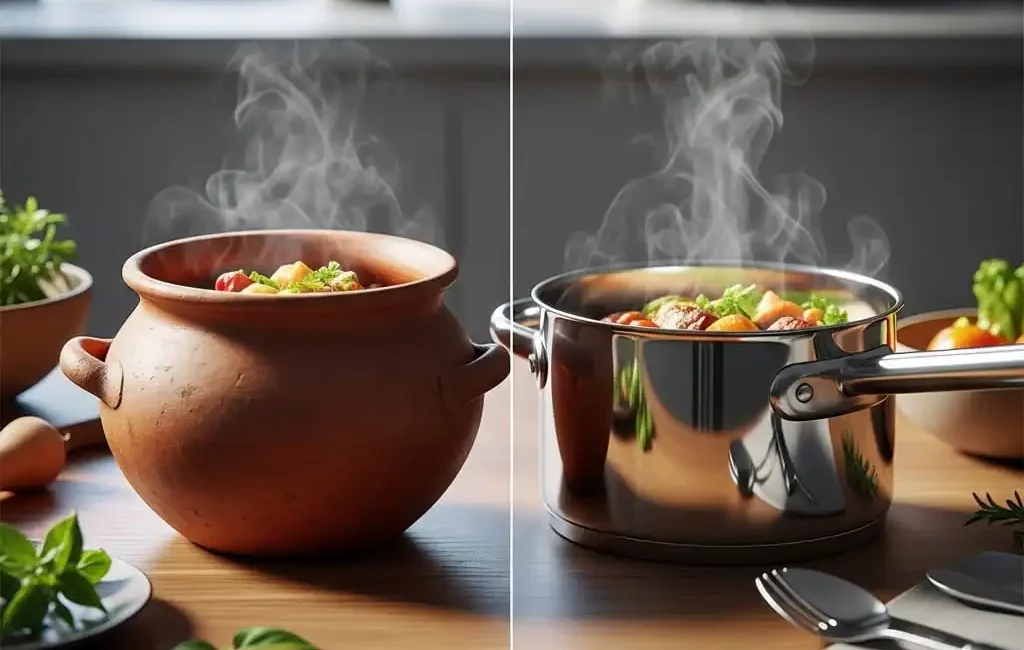
Clay Pots vs Metal Cookware: Which Is Better for Your Health?
Choosing the right cookware is more important than most people realize. The utensils you use daily can directly impact your health, nutrition, and even the taste of your food. Among the most debated options today are clay pots and metal cookware. While modern kitchens are dominated by stainless steel, aluminum, and non-stick pans, traditional clay cookware is making a strong comeback. So, which is better for your health — clay pots or metal cookware? Let’s explore this in detail. What Are Clay Pots? Clay pots, also known as earthen cookware, are made from natural soil and hardened by firing at high temperatures. They have been used for centuries in traditional cooking across India and many other cultures. These pots are chemical-free, eco-friendly, and naturally porous, which makes them unique compared to modern cookware. What Is Metal Cookware? Metal cookware includes a variety of materials such as: Stainless steel Aluminum Cast iron Non-stick (Teflon-coated) These are widely used due to their durability, convenience, and quick cooking capabilities. Clay Pots vs Metal Cookware: A Health Comparison 1. Nutritional Value of Food Clay Pots:Clay cookware cooks food slowly and evenly, helping to retain natural nutrients. The porous nature allows heat and moisture to circulate, preserving vitamins and minerals. Metal Cookware:Some metals can react with food, especially acidic ingredients like tomatoes or tamarind. This may lead to nutrient loss or chemical leaching (especially in low-quality cookware). Verdict: Clay pots are better for preserving nutrients. 2. Chemical Safety Clay Pots: 100% natural (if unglazed or lead-free) No harmful coatings Free from toxins like PFOA or PTFE Metal Cookware: Non-stick pans may release harmful fumes if overheated Aluminum can react with food Poor-quality coatings may peel and mix with food Verdict: Clay pots are safer when sourced from trusted manufacturers. 3. Oil Usage Clay Pots:Clay cookware requires less oil due to its heat retention and moisture-locking properties. Food cooks in its own juices. Metal Cookware:Metal pans often require more oil to prevent sticking, especially stainless steel. Verdict: Clay pots promote healthier, low-oil cooking. 4. Taste and Aroma Clay Pots:Cooking in clay enhances flavor naturally. The earthy aroma adds depth to dishes like biryani, curries, and dals. Metal Cookware:Metal cookware provides a neutral taste. It does not enhance flavors like clay. Verdict: Clay pots win for taste and authenticity. 5. Heat Distribution Clay Pots: Slow and even heating Prevents burning Ideal for simmering Metal Cookware: Heats quickly May cause uneven cooking in cheaper materials Verdict: Clay pots are better for slow, even cooking. 6. Impact on Digestion Clay Pots:Clay is alkaline in nature, which helps neutralize acidity in food. This can support better digestion and reduce issues like acidity and bloating. Metal Cookware:Certain metals may increase acidity when reacting with food. Verdict: Clay pots are more digestion-friendly. 7. Environmental Impact Clay Pots: Biodegradable Eco-friendly Sustainable production Metal Cookware: Requires mining and industrial processing Non-stick coatings contribute to pollution Verdict: Clay cookware is more environmentally friendly. Are There Any Disadvantages of Clay Pots? While clay pots are excellent for health, they do have some limitations: Fragile and can break easily Require soaking before use Longer cooking time Need proper maintenance However, these are minor compared to their health benefits. Are Metal Cookware Options Completely Unsafe? Not all metal cookware is harmful. Some options are safe when used properly: Safe Metal Options: Stainless steel (high-quality) Cast iron (adds iron to food) Hard-anodized cookware Less Safe Options: Cheap non-stick pans Low-quality aluminum cookware The key is choosing high-quality materials and using them correctly. Which Cookware Is Best for Everyday Use? Choose Clay Pots If You Want: Healthier cooking Better taste and aroma Natural, chemical-free food Low oil consumption Choose Metal Cookware If You Need: Faster cooking Durability Convenience for daily busy routines Best Foods to Cook in Clay Pots Clay cookware works exceptionally well for: Biryani and rice dishes Curries and gravies Dals and soups Slow-cooked meats Traditional Indian recipes These dishes benefit from slow cooking and enhanced flavor. Tips for Using Clay Pots Safely To get the best results from clay cookware: Soak the pot in water before first use Always cook on a low to medium flame Avoid sudden temperature changes Use wooden or silicone utensils Clean gently without harsh chemicals Proper care ensures long-lasting performance.